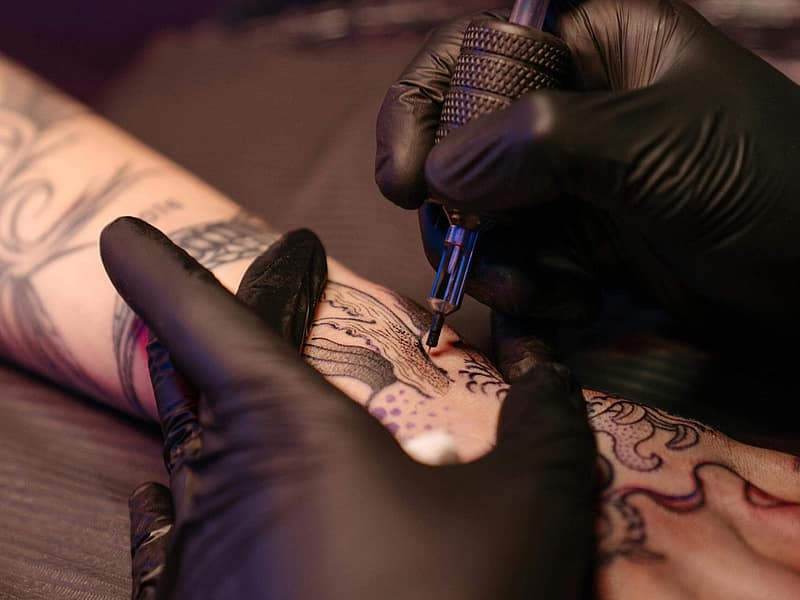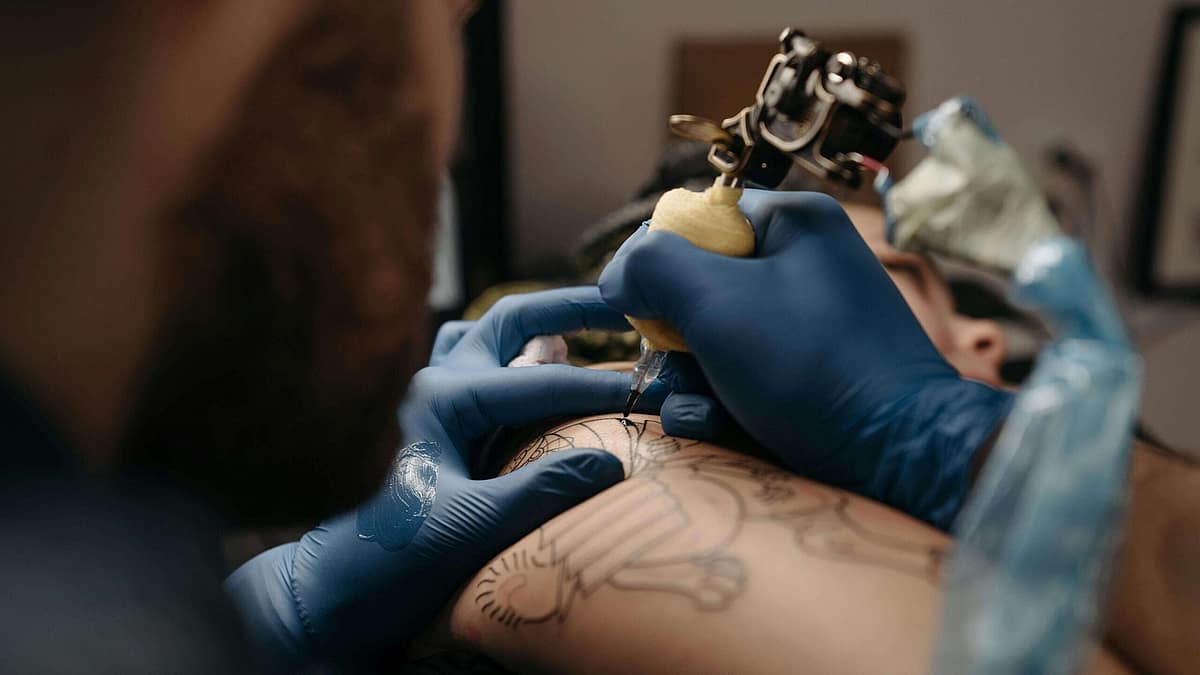
Cover-ups challenge artists to solve visual puzzles. Mastery arrives when you mix technical insight with honest client communication.
Start with clear diagnostics
Trace the existing tattoo onto acetate to analyse negative space and overlaps. Identify scar tissue, blowouts, and raised areas that impact ink saturation.
Design with intention
Sketch concepts that leverage the original tattoo’s shapes. Use gradients, large focal points, and strategic line weight to redirect attention. Incorporate textural backgrounds—such as smoke, foliage, or geometric patterns—to unify the composition.
Layer colour intelligently
Pack dense pigment where the old tattoo is darkest and transition to lighter tones in open skin. Build colours slowly to avoid muddy results. When needed, schedule multiple passes to allow saturation without overworking the skin.
Educate and align with clients
Explain limitations transparently and set realistic expectations around complete coverage versus camouflage. Outline session counts, healing phases, and maintenance so clients remain invested in the process.
Master artists treat cover-ups as collaborative journeys, not quick fixes.